
Issue 15/2025, News
Chinampas – the floating gardens of the Aztecs. A heritage that inspires the world
Oct
Artificial islands may seem like the invention of visionary 21st-century architects. In reality, the benefits of building on water were already known to the Aztecs, whose floating farms, called chinampas, continue to inspire planners around the globe. What is the secret of their genius?
What are chinampas?
The name comes directly from the Aztec language and refers to a system of plots built on shallow lakes or wetlands. The ancient inhabitants of Central America took advantage of the water abundance in their landscape to grow crops, perfecting this technology – evidence of which survives today in Mexico City.
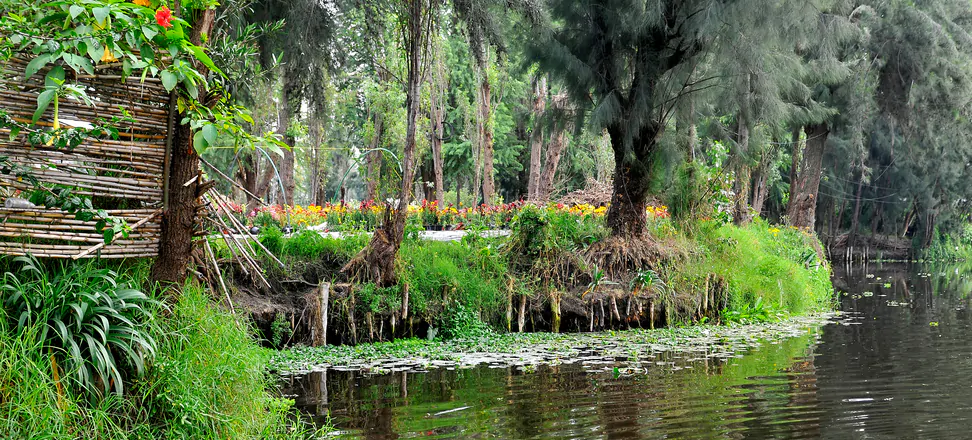
The construction of the floating farms involved transporting muddy lake sediments and organic matter into shallow water areas, and then shaping them into narrow plots about 6–10 m wide. The plots were separated by canals that made transport easier and ensured a steady water supply. Willows were planted along the edges of the chinampas, and wooden stakes were driven into the ground to stabilize the structures and keep them from drifting away with the currents.
Ecologists studying the system point out that the layered structure of the plots – partly made of plant debris and branches – functioned like a vascular network, guaranteeing even moisture distribution.
Chinampas allowed the Aztecs to farm year-round, regardless of the dry season, with multiple harvests each year and frequent crop rotation. Historical sources indicate that farmers did not have to worry about irrigation or fertilization, and that the yields – compared with the dry, often poor soils – were impressive. For the city of Tenochtitlan, home to 200,000 people, this meant a life without hunger.
Xochimilco, a World Heritage site
The best-preserved chinampas are found on Lake Xochimilco, located in the Valley of Mexico, south of Mexico City. Over the centuries, much of the lake has disappeared due to climate change, but the Aztec plots and surrounding canals have survived and are still used by local residents.
In 1987 the entire area was inscribed on the UNESCO World Heritage List. The waters of Xochimilco are now the last natural refuge of the axolotl – an endemic amphibian and a national symbol of Mexico. In 2018 the Food and Agriculture Organization of the United Nations (FAO) recognized Xochimilco as a Globally Important Agricultural Heritage System (GIAHS).
Today, local chinampas are used to cultivate kale, broccoli, squash, as well as marigolds and other flowers. Over the centuries, farmers have learned that biodiversity is the best strategy against pests and unpredictable weather. They are supported by experts from the National Autonomous University of Mexico (UNAM), who understand that preserving the chinampa tradition is not only a tribute to the past but also an investment in a sustainable future.
Working with nature, not against it
Modern agriculture often has disastrous effects on the environment – from excessive use of fertilizers and pesticides to soil degradation and biodiversity loss. The floating Aztec farms worked in the exact opposite way: they used natural resources while strengthening them at the same time.
Observations made in the Xochimilco region and in Mexico City clearly show that the gardens help filter water while storing it more effectively than open reservoirs, reducing evaporation. This has a major impact on the local microclimate, mitigating heat effects. Chinampas also benefit birds and many aquatic species that find in the plant-covered canals ideal habitats for feeding and breeding.
It is no wonder that the Aztec idea is gaining modern followers. In Bangladesh, vegetable cultivation on rafts made of water hyacinths began several years ago to reduce dependence on increasingly unpredictable monsoons. In the United States, the idea has so far been used to create floating ornamental gardens in both public spaces and private properties.
There is also growing interest in introducing chinampas to Europe – according to modern botanists, the concept could work well in countries such as the Netherlands and Germany. Catalina Rey-Hernández of Wageningen University believes that traditional water systems can help address today’s environmental challenges.
main photo credit: LBM1948/Wikimedia